
How to Have Your Best Year Ever — Jim Rohn's Full Seminar (Summary, Lessons & Watch Free)
Share
"How to Have Your Best Year Ever!" is Jim Rohn's foundational personal development seminar, delivered live in Dallas-Fort Worth, Texas in the early 1990s. Across four hours, Rohn lays out The Five Major Pieces to the Life Puzzle (Philosophy, Attitude, Activity, Results, Lifestyle), the Four Seasons of Life, the Five Abilities of Personal Development, and his framework for financial independence. The seminar's central principle — "You don't get what you want in life. You get what you become" — became the foundation of modern personal development, influencing Tony Robbins, Brian Tracy, Mark Victor Hansen, and a generation of motivational speakers.
Watch the full seminar below. The complete summary, key lessons, quotes, and FAQ follow.
Watch the full seminar: "How to Have Your Best Year Ever"
Who Was Jim Rohn?
Jim Rohn (1930–2009) was an American entrepreneur, author, and motivational speaker widely recognized as the founding voice of modern personal development. Born in Yakima, Washington and raised on a farm in southwestern Idaho, Rohn left college after his first year, married young, and by age 25 found himself broke, behind on his bills, and unable to provide for his family despite working full-time.
His life changed when he met Earl Shoaff — a wealthy businessman with what Rohn described as a unique philosophy of life. Rohn went to work for Shoaff at age 25, and within five years, applying Shoaff's principles, he became a millionaire by age 31. He later lost his fortune through poor financial decisions, recovered, and began sharing what he had learned in seminars across North America and eventually the world.
Over four decades, Rohn delivered more than 6,000 speaking engagements across 80 countries and mentored a generation of personal development leaders. He hired a 17-year-old Tony Robbins, who would later credit Rohn as the foundational mentor of his career. Brian Tracy, Mark Victor Hansen, Jack Canfield, Mark R. Hughes, and countless others studied directly under him.
Rohn's body of work — books, audio programs, and recorded seminars — remains the canonical text of self-development philosophy. How to Have Your Best Year Ever! is widely considered his most comprehensive single-session presentation, gathering the full sweep of his teaching into one four-hour seminar.
The Five Major Pieces to the Life Puzzle
The Five Major Pieces is the central framework of How to Have Your Best Year Ever! — Rohn's complete system for personal and financial transformation. Each piece represents a critical dimension of life that must be developed and integrated.
1. Philosophy — The Set of the Sail
Philosophy, in Rohn's framework, is the major determining factor in how your life works out. It is the sum of how you think, what you believe, and the conclusions you've drawn from your experiences. Rohn likens philosophy to "the set of the sail" — the same winds blow on everyone, but each person's set of the sail determines where they end up.
At age 25, Rohn blamed his circumstances for his failures — the government, the economy, taxes, his employer, his upbringing. Shoaff taught him none of these were the problem. His philosophy was. "You don't have to change countries," Shoaff told him. "You have to change philosophy." Once Rohn understood this, he began the deliberate work of refining how he thought, what he read, and the conclusions he drew. His income, bank account, and trajectory all changed within months.
2. Attitude — How You Feel
Where philosophy determines what you know, attitude determines how you feel — and feeling, Rohn argues, has equal power over results. He identifies four attitudinal relationships that must be developed:
Attitude about the past. Use it as a school, not a club. Don't beat yourself with old failures; learn from them and move forward.
Attitude about the future. Set goals. The promise of a designed future creates the daily energy to act. Without it, you take hesitant steps and drift.
Attitude about others. It takes everyone to make a marketplace, a family, a nation. Cynicism about other people locks you out of every opportunity human cooperation creates.
Attitude about yourself. Self-worth is the beginning of progress. If anyone can do it, you can do it.
3. Activity — The Miracle-Working Piece
Activity is the labor part of life — the discipline of taking action. Rohn calls it the miracle-working piece because results follow only when wisdom (philosophy) and emotion (attitude) are invested into disciplined action.
The framework here has two parts: do what you can (start with what's in front of you, neglect nothing) and do the best you can (every effort at full intensity). Rohn cites the ancient principle: "Whatever your hands find to do, do it with all your might."
He warns specifically against the "half-day-work-full-day-pay" mentality — putting in less than required while expecting full compensation. The deficit doesn't show up immediately, but it compounds invisibly until disaster arrives.
4. Results — The Measurement of Progress
Rohn calls results "the name of the game." Every week, every month, every year — you have to take measure. Not to punish yourself, but to know whether your philosophy, attitude, and activity are producing what they should.
When Shoaff first asked Rohn how much he had saved in his first six years of working, Rohn answered: zero. How many books had he read in the last 90 days? Zero. How many skill-building classes had he attended in six months? Zero. Shoaff's response: "Mr. Rohn, you have messed up."
Rohn's principle: "Success is a numbers game." Make measurable progress in reasonable time. Children get one year for fourth grade; we accept no excuses. Adults should hold themselves to similar accountability — but for income, savings, health, skills, and growth.
5. Lifestyle — The Art of Living Well
Lifestyle is the fifth piece — what you do with your results once you have them. It is, Rohn argues, the most challenging piece, because results alone don't create a good life. The art of living well must be deliberately fashioned, like weaving a tapestry.
Shoaff taught Rohn two phrases that reshaped his approach: "If you wish to be wealthy, study wealth" and "If you wish to be happy, study happiness." Both wealth and happiness are studies — not accidents. You can be cultured without being rich. You can be sophisticated without being famous. But you cannot be either without deliberate study and practice.
Rohn's lifestyle teaching includes deliberate generosity (the two-quarter principle — when in doubt, give more), thoughtful family relationships, and the cultivation of beauty, culture, and meaning beyond mere accumulation.
The Four Seasons of Life
Rohn frames life as cyclical, not linear. "Life and business is like the seasons," he says. "You cannot change the seasons, but you can change yourself." Each season requires a different skill set.
Winter — Learn to handle the difficult times. Winters come every year. Economic winters, social winters, personal winters of heartbreak and discouragement. The strategy is not to wish them away (they always return) but to get wiser, stronger, and better through them.
Spring — Learn to take advantage of opportunity. Spring follows winter — always. The question is whether you act on it. Rohn's principle: "Plant in the spring or beg in the fall." Opportunities are fragile and brief; seize them or watch them pass.
Summer — Learn to nourish and defend. Summer is when your garden grows — and when bugs, weeds, and predators come for it. You must both nurture what's valuable and aggressively defend it from what would destroy it. Love like a mother; fight like a father.
Fall — Reap the harvest without complaint. Take responsibility for what you've produced — good or bad. No apology if you've done well; no complaint if you haven't. The harvest reflects the year. Own it.
The Five Abilities of Personal Development
The Five Abilities are the practical skills Rohn argues every person must develop to transform their life — not personality traits, but learnable capacities.
1. The Ability to Absorb. Be like a sponge. "Wherever you are, be there." Don't just get through your day — get from your day. Most people miss what's happening around them. The skill is full presence: noticing the words, the atmosphere, the texture of an experience.
2. The Ability to Respond. Let life touch you. Let sad things make you sad and let beautiful things move you. Rohn's principle: "Our emotions need to be as educated as our intellect." Numbness to experience is a form of being only half alive.
3. The Ability to Reflect. Go back over your day, your week, your month, your year. Lock in the experience. Most lives evaporate because the days are never gathered up — they pass without being processed. Rohn recommends time alone in the evening, end-of-week review, monthly half-days, annual weekend reflections.
4. The Ability to Act. When the emotion is high and the idea is clear — that's the moment to act. The "law of diminishing intent" says good intentions decay rapidly. Rohn's rule: set the discipline the same day you encounter the idea. Buy the book before the inspiration cools.
5. The Ability to Share. Pass along what you've learned. Not only does it help the receiver, it expands your own capacity. "If you share with 10 different people, they get to hear it once, you get to hear it 10 times."
Jim Rohn's Formula for Failure vs. Success
One of the most-quoted frameworks in all of personal development comes from this seminar:
The Formula for Failure: A few errors in judgment, repeated every day.
The Formula for Success: A few simple disciplines, practiced every day.
Rohn's example is the apple versus the candy bar. The single decision feels trivial. But repeated 365 times, then for six years, then for twenty — the difference between health and disease, wealth and poverty, mastery and mediocrity becomes catastrophic.
The principle applies universally: reading, exercise, savings, communication, relationships. "Just because disaster doesn't fall on us at the end of the first day," Rohn warns, "doesn't mean disaster isn't coming."
This insight is the operational core of the seminar. Every other framework Rohn teaches — the Five Pieces, the Seasons, the Abilities — ultimately reduces to this: which simple disciplines will you adopt today, and will you practice them long enough for them to compound?
Jim Rohn's Financial Framework — The 70/10/10/10 Principle
Rohn's financial philosophy, taught primarily to young people but applicable at any income level, is structured around a simple allocation:
- 70% — Living expenses. Spend no more than 70 cents of every dollar earned.
- 10% — Charity and contribution. Support causes, churches, and people who cannot help themselves. "Nothing teaches character better than the simple act of generosity."
- 10% — Active capital. Invest in your own ventures, side businesses, or profit-generating activities. "Profits are better than wages."
- 10% — Passive capital. Lend, invest, earn interest. "The borrower is servant to the lender."
Rohn acknowledges these numbers are an ideal — many people start in worse positions and must work toward this allocation gradually. The principle is the structure, not the percentages. "It's not the amount that counts," Shoaff told him at 25. "It's the plan that counts."
Key Quotes from "How to Have Your Best Year Ever!"
"You don't get what you want in life. You get what you become."
"Work harder on yourself than you do on your job. If you work hard on your job, you'll make a living. If you work hard on yourself, you'll make a fortune."
"Don't wish it was easier. Wish you were better. Don't wish for less problems. Wish for more skills."
"What you have at the moment, you've attracted by the person you've become."
"For things to change, you have to change. If you will change, everything will change for you."
"Time is more valuable than money. You can get more money, but you cannot get more time."
"Treat your body like a temple, not a woodshed."
"Stand guard at the door of your mind."
"If you wish to be wealthy, study wealth. If you wish to be happy, study happiness."
"Affirmation without discipline is the beginning of delusion."
"The greatest source of unhappiness is self-unhappiness."
"Don't be lazy in learning."
"Either you run the day, or the day runs you."
— Jim Rohn, How to Have Your Best Year Ever!
Frequently Asked Questions
Where and when was How to Have Your Best Year Ever! recorded?
The seminar was recorded live in Dallas-Fort Worth, Texas, in the early 1990s. The full recording runs approximately 4 hours and 22 minutes and is considered Jim Rohn's most comprehensive single-session presentation.
What are the Five Major Pieces to the Life Puzzle?
The Five Major Pieces are: Philosophy (how you think), Attitude (how you feel), Activity (what you do), Results (what you measure), and Lifestyle (how you live). Together, they form Jim Rohn's complete framework for personal development, introduced in his book The Five Major Pieces to the Life Puzzle and taught throughout How to Have Your Best Year Ever!
Who mentored Jim Rohn?
Jim Rohn was mentored by Earl Shoaff, a wealthy entrepreneur and personal development teacher, beginning at age 25. Rohn worked for Shoaff for five years until Shoaff's death at age 49. Rohn credited Shoaff with the philosophy that transformed his life from broke at 25 to millionaire at 31.
Did Tony Robbins study under Jim Rohn?
Yes. Tony Robbins worked for Jim Rohn beginning at age 17, attending Rohn's seminars and learning his frameworks directly. Robbins has publicly credited Rohn as the foundational mentor of his career across decades of interviews and books.
What is Jim Rohn's most famous quote?
Rohn is most associated with the principle: "You don't get what you want in life. You get what you become." This phrase appears repeatedly throughout How to Have Your Best Year Ever! and is the philosophical foundation of his teaching on personal development.
What books did Jim Rohn recommend in this seminar?
In How to Have Your Best Year Ever!, Rohn specifically recommends Think and Grow Rich by Napoleon Hill, The Richest Man in Babylon by George Clason, How to Read a Book by Mortimer Adler, and The Lessons of History by Will and Ariel Durant. He also recommends maintaining a personal journal alongside building a library.
Is How to Have Your Best Year Ever! available for free?
The full unabridged seminar is available to watch free on YouTube. The official audio program, books, and licensed materials are available through Jim Rohn's official store at store.jimrohn.com.
What is the difference between Rohn's "Five Major Pieces" and his "Five Abilities"?
The Five Major Pieces are dimensions of life to develop: Philosophy, Attitude, Activity, Results, and Lifestyle. The Five Abilities are the practical skills used to develop them: Absorb, Respond, Reflect, Act, and Share. The Pieces are what to build; the Abilities are how to build them.
How long is the How to Have Your Best Year Ever! seminar?
The full seminar runs 4 hours and 22 minutes. Rohn covers personal philosophy, attitude, activity disciplines, measurable results, lifestyle design, the Four Seasons of Life framework, the Five Abilities of Personal Development, goal setting, financial independence, and communication mastery.
Support Jim Rohn's Legacy
Jim Rohn passed away in 2009, but his teachings remain among the most studied and cited works in personal development. If his philosophy has impacted your life, support the official sources directly:
- Official website: jimrohn.com
- Official store (books, full seminars, audio programs): store.jimrohn.com
- Official Facebook (2.3M followers): facebook.com/OfficialJimRohn
This article is for educational and inspirational purposes. All quotes and frameworks belong to Jim Rohn and the Jim Rohn estate.
Continue Studying Jim Rohn
- Jim Rohn's "The Challenge to Succeed" — Full Seminar Breakdown
- Henry Cavill's 50 Points of Advice from an 80-Year-Old Man
- 100 Laws of Life — So You Don't Screw Your Life Up Like I Did
Build the Discipline Rohn Taught
Studying Rohn is the beginning. Living the Five Pieces — daily — is the work.
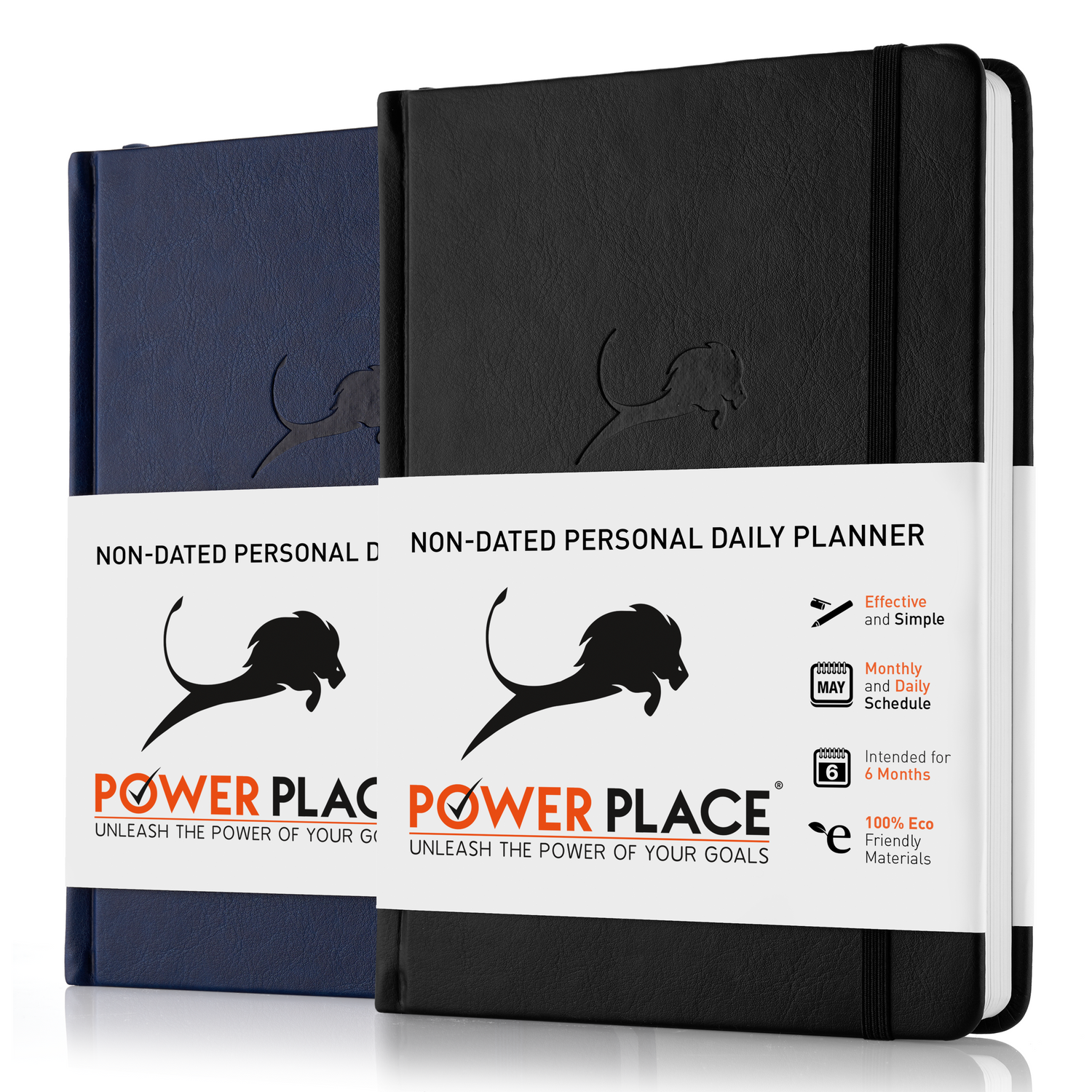
The Power Place Planner is a structured daily planner designed around Rohn's framework: dedicated space for your why, your vision board, your goals, your daily disciplines, and your gratitude practice. The Five Pieces, made physical.