
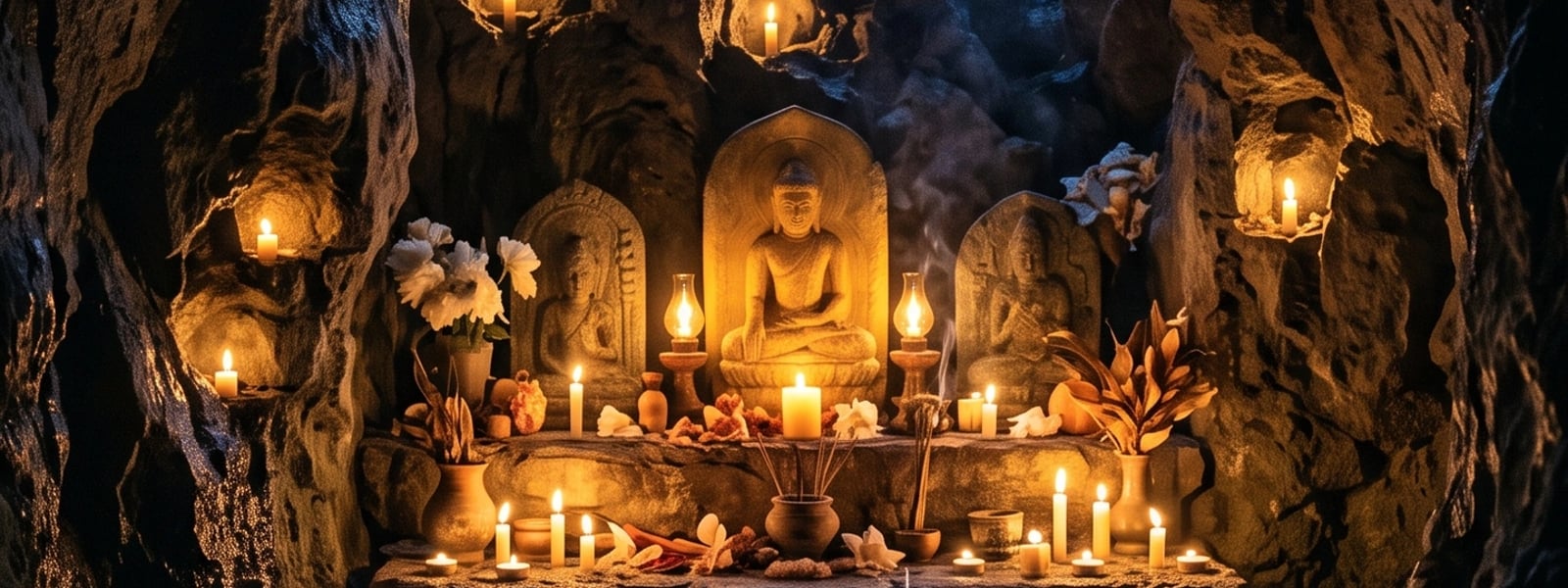
“We are of the earth very earthy, and we are not satisfied with contemplating the Invisible God. Somehow or other we want something which we can touch, something which we can see, something before which we can kneel down. It does not matter whether it is a book, or an empty stone building, or a stone building inhabited by numerous figures. A book will satisfy some, an empty building will satisfy some others, and many others will not be satisfied unless they see something inhabiting these empty buildings.”
Share this quote
Probable attribution
This saying is widely associated with Mahatma Gandhi, but the attribution is not supported by a reliable primary source.
Likely origin: Gandhi, from 'What is Hinduism?' (compilation of his writings/speeches) — remarks on why people want a visible object of worship.
About this quote
An abstract commitment is hard to hold in the mind, so people anchor it in something they can see, touch, or stand before. Different people need different anchors, and none is more valid than another. The practical upshot is tolerance: judge the devotion, not the form it takes.
When to use it
- Someone saving money keeps a coin jar in plain sight because an invisible bank balance feels too abstract to stay motivated by.
- A grieving family keeps a photo and an empty chair at the table, since a physical reminder holds a memory better than thought alone.
- A community lets some members worship in a hall and others quietly at home, without insisting everyone use the same outward form.